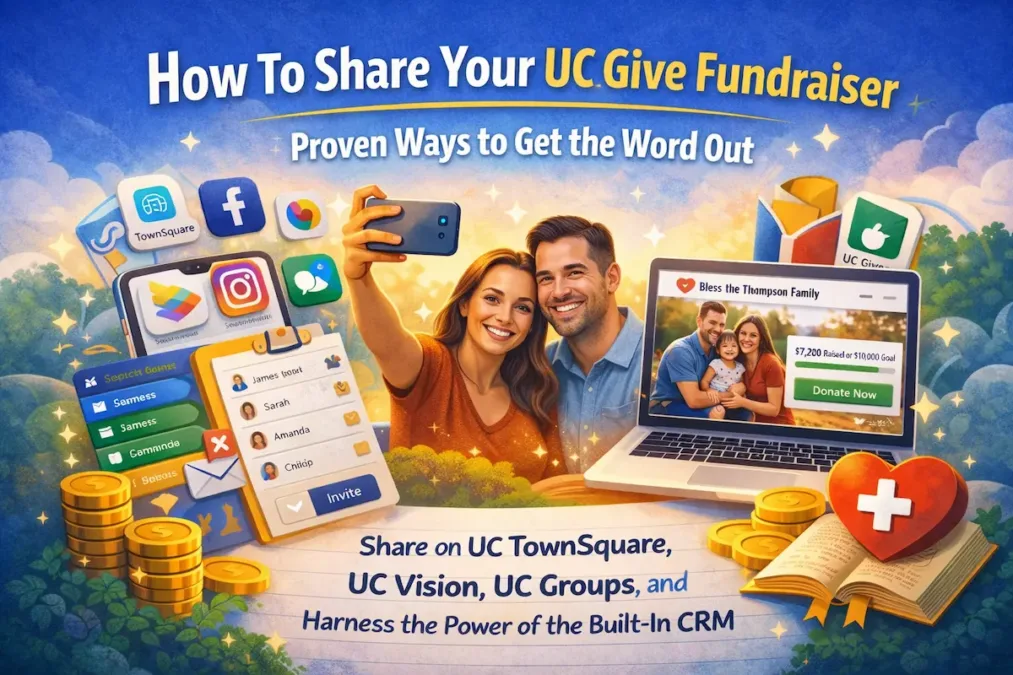
Once you’ve started your UC Give fundraiser, the next step is sharing it with your community — so people can see it, connect with your story, and give. Sharing isn’t just about posting a link — it’s about connecting your mission to people’s hearts and helping your support network join in.
Here’s how to get the word out on the right platforms, make your message compelling, and multiply your impact using UC Give’s built-in tools and beyond.
1. Share on UC TownSquare
UC TownSquare is your first and most natural home turf.
- Post your campaign link and story in TownSquare to reach your community.
- Use a clear invitation and personal language.
- Include an eye-catching photo from your campaign.
Pro tip: Invite friends to comment and share — activity increases visibility for others.
2. Feature Your Fundraiser on UC Vision
UC Vision is where powerful visuals and stories shine.
- Create a striking post with your campaign headline and photo.
- Add a short video message or testimonial if you have one.
- Tag relevant themes so more community members see your story.
Vision posts travel far — creativity helps them spread.
3. Promote in UC Groups
UC Groups are intimate, focused communities where people already care about topics like ministry, missions, families, and outreach.
- Share your campaign in relevant groups: church groups, missions interest, local area groups, prayer groups, and more.
- Invite thoughtful discussion — people engage more when they can ask questions.
- Be respectful of group rules and tone.
Groups are powerful because they’re relational, not random.
4. Use Your CRM to Engage Supporters
UC Give’s built-in CRM helps you organize and reach your network with intention.
Use it to:
- segment supporters (family, church, ministry partners, volunteers)
- send personalized invites
- schedule reminders
- track responses and follow-ups
A message feels more compelling when it speaks to the individual — not just a list.
Pro tip: Include a short prayer request and a clear “how you can help” line in CRM emails.
5. Social Media Sharing That Works
Your UC Give campaign isn’t limited to UC — spread it across popular platforms:
- TikTok
- Twitter/X
When posting:
- lead with a short invitation
- clearly explain the need
- include a vibrant campaign photo
- ask for both giving AND sharing
People who don’t give might still share — and shares expand reach.
6. Go Beyond Links — Tell a Story
Don’t just paste a link — give context.
Instead of:
“Here’s my campaign.”
Try:
“Hi friends, we’re raising funds to help rebuild the community center that burned down. If you can, please give $10 — but if not, please share this with someone who can.”
Clear, short explanations help people understand the need immediately.
7. Ask for Specific Support
Statements like these work better than general asks:
- “Will you consider giving $25 to help provide school supplies?”
- “A gift of $50 helps finish the roof repairs.”
- “Even $5 shared with a neighbor matters.”
Specific amounts help people decide quickly — and help them visualize impact.
8. Leverage Email and Messaging Outside CRM
Don’t underestimate personal outreach:
- email your church directory
- text your close friends
- message small groups
- ask leaders to announce during meetings
Sometimes a personal, direct message is what inspires someone most.
9. Share Regular Updates
Keep your campaign alive — regular updates increase visibility and encouragement.
Post updates:
- when you reach milestones (50% to goal, 75%, completed!)
- when something meaningful happens
- when prayers are answered
- with progress photos
Updates renew momentum and give new reasons for people to share again.
10. Say Thanks — and Invite More Support
Thanking supporters is not just polite — it motivates action.
Ways to express gratitude:
- post personal thank-you messages in UC TownSquare and Vision
- send thank-you messages via CRM
- highlight supporters (if they’re comfortable with it)
- publicly celebrate milestones
Public gratitude inspires others to join in.
Final Thought
Sharing your UC Give fundraiser isn’t just promotion — it’s calling people into a shared mission.
Use your UC community channels, your personal networks, and built-in tools like CRM to tell your story with clarity, heart, and purpose.
When people understand the need — and the hope — they’re far more likely to respond.